
Blog
What helps UTI Healing

In Part 1: Why Women Get UTIs, we explored anatomy, rushed bathroom habits, intimacy, pregnancy, postpartum recovery, menopause and pelvic tension.
Now we address the question most women ask when burning and urgency begin:
What can I do right now?
Natural Care Must Begin With Honest Care
Across many traditional, herbal and complementary systems of medicine, UTIs are not seen as isolated infections—but as imbalances in the body involving heat, inflammation, stagnation, digestion and elimination.
Herbalists and traditional practitioners often believe that diet and herbs can help support the body during healing, especially in early or mild cases.
However, it is essential to understand:
- Some UTIs can become serious quickly
- Kidney infections can be dangerous
- Pregnancy changes risk significantly
The goal is not “natural versus medical.”
The goal is safe, informed, whole-person care.
Seek Prompt Medical Care When You Have:
- Fever or chills
- Pain in the back, side or below the ribs
- Nausea or vomiting
- Blood in the urine
- Severe or worsening pain
- Difficulty passing urine
- Symptoms during pregnancy
- Symptoms shortly after childbirth
- Diabetes, kidney disease or weakened immunity
- Repeated infections
- Symptoms that do not improve
These may indicate a more serious infection that requires medical treatment.
What You Can Do Immediately
1. Drink Water — But Also Healing Fluids
Water remains essential. It helps dilute urine and supports flushing.
Traditional herbal systems also recommend warm herbal teas to soothe irritation and support urinary flow. Gentle options include:
- Chamomile tea – calming and soothing to inflamed tissue
- Corn silk tea – traditionally used to ease urinary irritation
- Dandelion leaf tea – supports gentle fluid movement
- Parsley tea – mild diuretic effect to encourage urination
- Ginger tea (mild) – supports circulation and warmth without overstimulation
- Marshmallow root tea – known for its soothing, mucilage-rich properties
Other supportive fluids may include:
- Diluted vegetable broths
- Barley water (used in Unani and Ayurvedic traditions)
These are believed to soothe inflammation and support urinary comfort.
2. Urinate Frequently
Do not hold urine.
Traditional medicine views stagnation as a key contributor to discomfort. Frequent urination helps remove irritants and bacteria.
3. Rest and Warmth
In many healing traditions, UTIs are associated with internal heat and irritation, but also weakness and depletion.
Rest allows the body to redirect energy toward healing.
Warmth (not overheating) supports circulation and comfort.
4. Pause Sexual Activity
Sex can aggravate inflammation and introduce additional irritation.
Allow the body to heal fully before resuming intimacy.
Can Diet Cure a UTI?
In conventional medicine, diet is not considered a cure for an active bacterial infection.
However, traditional herbalists, naturopaths and complementary practitioners often believe that diet plays a supportive role in healing and prevention.
From this perspective:
- Certain foods may help reduce irritation
- Some may support immune function
- Others may encourage healthy urinary flow
Diet is therefore seen as part of the healing process, not a standalone cure.
Foods Traditionally Used to Support UTI Healing
1. Hydrating and Cooling Foods
In herbal traditions, UTIs are often linked to excess heat or irritation.
Cooling foods may include:
- Cucumber
- Watermelon
- Coconut water
- Leafy greens
- Zucchini and squash
These foods are believed to soothe the urinary tract and reduce irritation.
2. Garlic
Garlic is widely used in traditional medicine for its natural antimicrobial properties.
Herbalists often recommend:
- Raw garlic in small amounts
- Lightly cooked garlic in meals
It is believed to support the body’s natural defence processes.
3. Parsley and Coriander
These herbs are traditionally used as gentle diuretics, helping increase urine flow.
They may be consumed as:
- Fresh herbs in meals
- Herbal teas
4. Barley Water
Used in Unani and Ayurvedic medicine, barley water is believed to:
- Soothe the urinary tract
- Promote urination
- Reduce irritation
5. Cranberry
Cranberry is one of the most widely known natural supports.
Traditional and modern perspectives suggest it may help:
- Reduce bacterial adherence to the bladder wall
- Support prevention in some women
It is best used as:
- Unsweetened juice
- Capsules or extracts
6. Fermented Foods
Traditional systems emphasise gut health as central to immunity.
Foods such as:
- Plain yoghurt
- Kefir
- Sauerkraut
may support microbial balance, although they are not direct cures.
Herbs Traditionally Used for UTIs
Herbalists across different traditions use specific plants to support urinary health.
Common examples include:
- Uva ursi (bearberry): traditionally used for urinary conditions
- Corn silk: soothing and anti-inflammatory
- Dandelion leaf: gentle diuretic
- Goldenrod: supports urinary tract health
- Horsetail: used for bladder support
- Buchu (South African herb): traditionally used for urinary conditions
These herbs are believed to:
- Increase urine flow
- Reduce irritation
- Support the body’s natural defence mechanisms
Important: These herbs can have side effects and are not suitable for everyone. Always consult a qualified practitioner before use.
Foods to Reduce During a UTI
Many traditions recommend reducing foods that may increase irritation:
- Coffee and caffeine
- Alcohol
- Refined sugar
- Highly processed foods
- Very spicy meals
- Artificial sweeteners
These may worsen burning or urgency in some individuals.
A Gentle Healing Eating Pattern
Instead of strict rules, aim for:
- Warm, nourishing meals
- Plenty of fluids
- Fresh vegetables and fruits
- Whole foods over processed foods
- Regular meals
Avoid extreme detoxes or restrictive diets.
Healing requires nourishment.
The Unani Tibb Perspective
Unani medicine views UTIs as an imbalance involving heat, moisture and elimination.
Treatment traditionally includes:
- Cooling foods
- Hydrating fluids
- Herbal preparations
- Supporting digestion and elimination
Importantly, Unani also recognises the need for clinical diagnosis and modern testing when necessary.
Natural Does Not Mean Risk-Free
Some herbal remedies can be strong.
Avoid:
- High-dose herbal mixtures without guidance
- Essential oils taken internally
- Inserting substances into the urethra or vagina
- Self-treating severe symptoms
Natural care should be informed and respectful of the body’s limits.
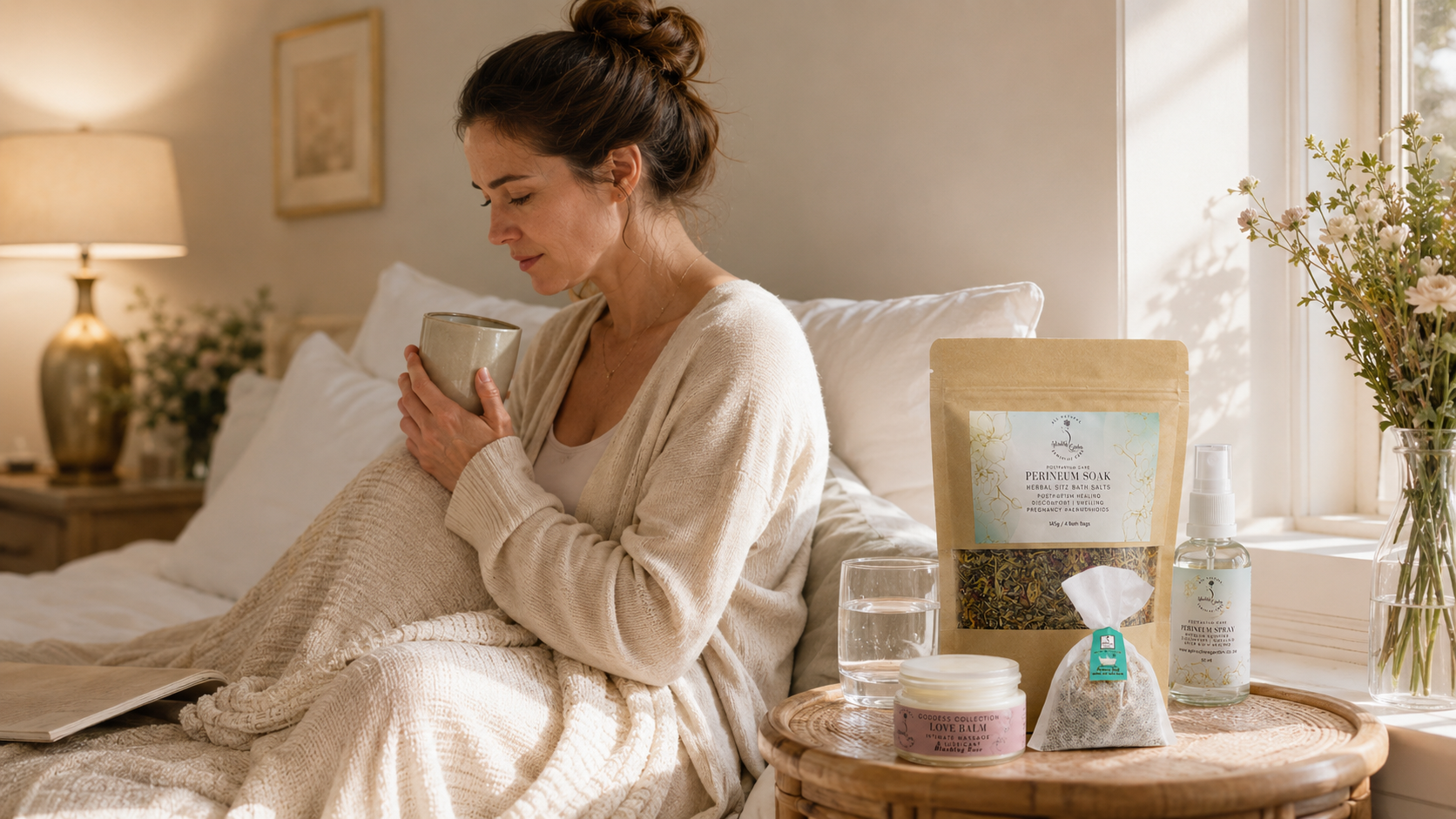
AG Products: Comfort Without False Claims
Aphrodite’s Garden does not claim that external products can cure UTIs.
However, they can support comfort during healing:
For postpartum tenderness
Perineum Spray Soother
Perineum Soak Herbal Sitz Bath Salts
For dryness and delicate skin
Perineum Balm – Nourishing Moisture for the Vaginal Area
For intimacy comfort
Love Intimate Massage Balm & Lubricant
These products:
- Support external comfort
- Do not treat infection
- Should not delay medical care
Healing Is More Than Silencing the Burning
From a traditional perspective, healing is not just about removing bacteria.
It is about restoring balance:
- Hydration
- Nourishment
- Rest
- Elimination
- Emotional and physical wellbeing
Sometimes diet and herbs may support recovery.
Sometimes medical treatment is necessary.
Often, the most effective approach is a thoughtful combination of both.
Continue the series: Part 3: How to Prevent UTIs Naturally—A Woman’s Daily Bladder-Care Guide
“True healing is not choosing between natural and medical care—it is knowing when your body needs each, and responding with wisdom.”


