
Blog
How to Prevent UTIs Naturally (Part 3)

Read the previous articles:
Prevention is not one supplement, one juice or one perfect bathroom ritual.
It is a relationship with the body.
First, What Is a Recurrent UTI?
Recurrent cystitis is generally defined as at least two episodes within six months or three episodes within one year. Repeated symptoms should ideally be confirmed with urine testing because burning and urgency can also result from vaginal dryness, pelvic-floor dysfunction, bladder pain syndrome and other conditions.
A prevention plan will be more effective when you know whether the problem is:
- A new infection each time.
- The same infection returning.
- Incomplete bladder emptying.
- A post-sex pattern.
- Pregnancy-related.
- Postpartum.
- Menopause-related.
- Connected to diabetes, stones or another condition.
- Not an infection at all.
1. Create a Hydration Rhythm
For generally healthy adults, South African health guidance such as that from the Western Cape Government Health Department encourages regular fluid intake throughout the day, with water as the primary source. Individual needs differ according to weather, exercise, pregnancy, breastfeeding, medication and health conditions.
A woman living through a hot Cape Town day, breastfeeding, exercising or fasting may need a more thoughtful hydration plan than someone sitting indoors in cool weather.
Hydration is not only about quantity—it is also about quality and electrolyte balance.
- Choose clean, good-quality drinking water where possible.
- Consider adding a small pinch of Celtic sea salt or Himalayan salt to your water to support natural electrolyte balance, especially if you sweat frequently.
- Electrolytes (such as sodium, potassium and magnesium) help regulate fluid balance, nerve function and muscle activity—including bladder function.
- This becomes especially important during breastfeeding, exercise or hot weather, when fluid and mineral losses are higher.
- Coconut water can be a gentle, natural source of electrolytes and may support hydration when used in moderation.
Practical habits include:
- Drinking water after waking.
- Keeping a bottle where you work.
- Drinking with meals.
- Having water before leaving home.
- Rehydrating after exercise.
- Increasing fluids gradually rather than drinking everything at night.
A clinical trial found that increasing water intake reduced recurrent cystitis among premenopausal women who previously drank low amounts of fluid.
Women with kidney disease, heart disease or prescribed fluid restrictions should follow personalised medical advice before adjusting electrolyte intake.
2. Stop Treating Urination as an Inconvenience
The bladder needs time and relaxation to empty.
Try this bathroom reset:
- Go when you feel a genuine urge rather than holding for long periods.
- Lower your clothing enough that it does not restrict your hips.
- Sit fully where it is safe and practical.
- Place both feet on the floor or a stable support.
- Relax your jaw and shoulders.
- Let your abdomen soften.
- Breathe out slowly.
- Allow the urine to flow without pushing.
- Remain seated briefly after the stream finishes.
- Wipe from front to back.
- After urination, gently rinse the vulval and perineal area with clean water using an AG Perispray Bottle. This convenient, portable bottle allows you to cleanse without irritation and can also be filled with a diluted Perineum Soak solution for added soothing support when needed.
Holding urine for too long and failing to empty fully can leave residual urine in which bacteria may multiply, a concern also highlighted in South African primary healthcare guidance.
3. Rethink the Public-Toilet Hover
We understand why women hover.
Public bathrooms can be unpleasant. You may be carrying a handbag, shopping parcels and a child who refuses to stand still.
Yet regular hovering can keep the pelvic floor active when it should be relaxing. Studies have associated hovering with reduced urine flow and incomplete emptying.
Where practical:
- Clean or cover the seat.
- Keep your handbag off the floor.
- Sit fully.
- Do not rush or push.
- Wash your hands thoroughly afterwards.
The goal is not perfect bathroom behaviour. It is giving the bladder a fair chance to empty.
4. Build a Gentle Intimacy Routine
Sex-related UTIs are common, but they are not evidence of poor character or uncleanliness.
Helpful conversations and habits may include:
- Taking more time for arousal.
- Addressing vaginal dryness.
- Using adequate lubrication.
- Avoiding painful friction.
- Urinating after sex rather than delaying for hours.
- Washing the external genital area gently.
- Never douching.
- Discussing spermicide or diaphragm use if infections repeatedly follow sex.
Sexual activity, menopause, spermicides and diaphragms are recognised risk factors for some women, including in South African clinical practice.
For external glide and intimate comfort, consider Love Intimate Massage Balm & Lubricant. It does not prevent bacterial infection, and it should be used only according to its instructions.
5. Protect the Vulval and Vaginal Environment
The vagina is self-cleaning. It does not need internal perfumes, douches, fragranced washes, deodorising sprays or harsh antiseptics.
Over-cleansing may irritate delicate tissue and disturb the local environment. South African reproductive health guidance similarly advises avoiding douching and unnecessary internal cleansing.
Use gentle external cleansing only. Pat rather than scrub.
Breathable underwear and clothing may feel more comfortable, especially in hot weather or during exercise. Change out of wet swimwear and very sweaty clothing when possible.
6. Support Comfortable External Tissue
Dry, fragile or irritated vulval tissue can make urination and intimacy uncomfortable, particularly postpartum and during peri/menopause.
Aphrodite’s Garden’s Perineum Balm – Nourishing Moisture for the Vaginal Area helps moisturise external vulval and perineal skin. It is suitable as supportive skincare through different stages of womanhood but does not prevent or treat an internal urinary infection.
Persistent dryness, painful sex, recurrent infections or bleeding should be discussed with a qualified women’s-health professional.
7. Keep the Bowels Moving
The bowel and bladder share a small space in the pelvis.
Constipation may increase pelvic pressure and contribute to difficulty emptying the bladder. South African dietary guidelines emphasise fibre, hydration and movement to support bowel health and overall wellbeing.
Choose foods such as:
- Vegetables.
- Whole fruits.
- Beans and lentils.
- Oats and whole grains.
- Nuts and seeds.
- Adequate water.
Increase fibre gradually to avoid uncomfortable bloating.
8. Eat to Nourish, Not to “Sterilise” the Bladder
There is no food that disinfects the urinary tract.
A nourishing prevention pattern can include:
Regularly
- Water.
- Fibre-rich vegetables and whole foods.
- Whole fruit rather than sugary juice.
- Adequate protein.
- Plain yoghurt or fermented foods if tolerated.
- Meals that support stable blood sugar.
Consider with professional guidance
- Cranberry products for women with recurrent, confirmed UTIs.
Cranberry has moderate evidence as a preventive option for some women with recurrent UTIs, but it does not cure an active infection.
Reduce only when they worsen your symptoms
- Coffee or strong caffeinated tea.
- Fizzy drinks.
- Highly spicy meals.
- Very acidic foods.
- Artificially sweetened drinks.
These may irritate a sensitive bladder but are not universal UTI causes.
Do not depend on
- D-mannose as a guaranteed preventive.
- Baking-soda drinks.
- Apple-cider-vinegar remedies.
- Strong herbal diuretics.
- Essential oils taken internally.
- “Detox” products.
- Large supplement doses without professional guidance.
A 2024 randomised trial found no preventive benefit from daily D-mannose in women with recurrent UTIs.
9. Recognise Life-Stage Risk
Pregnancy
Attend routine antenatal urine testing and report symptoms promptly. South African maternity care guidelines emphasise screening and early treatment because pregnancy-related urinary changes can increase the risk of complications.
Postpartum
Do not assume every burning sensation comes from stitches, and do not assume every burning sensation is a UTI.
Report persistent urgency, bladder pain, fever, difficulty urinating or feeling unwell. Catheter use and operative delivery may increase postpartum risk.
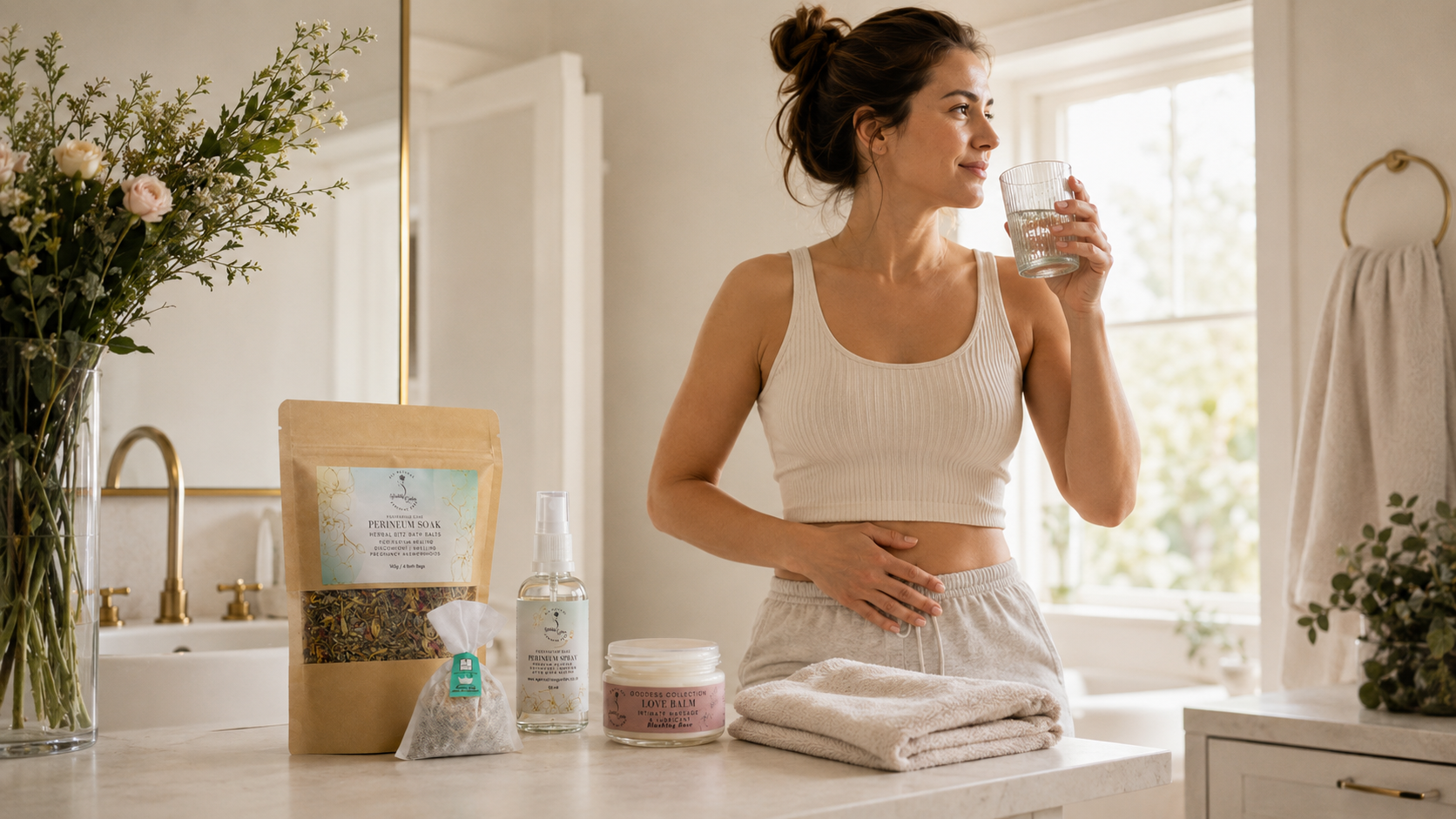
For external postpartum comfort, explore the Perineum Spray Soother and Perineum Soak Herbal Sitz Bath Salts. Neither product treats urinary bacteria.
Perimenopause and menopause
Declining oestrogen can change vaginal tissue, pH and microbial balance, contributing to dryness and recurrent UTIs.
Natural external moisturising can support comfort, while recurrent infection requires clinical assessment.
10. Let the Pelvic Floor Relax
Not every woman needs more Kegel exercises.
Some pelvic floors are weak. Others are excessively tight and struggle to relax.
A hypertonic pelvic floor may cause:
- Difficulty starting urination.
- Interrupted urine flow.
- A feeling of incomplete emptying.
- Pelvic or hip discomfort.
- Pain during or after sex.
- Urinary frequency.
These symptoms deserve pelvic-floor assessment rather than random strengthening exercises.
Gentle belly breathing can help you notice whether you are constantly gripping your stomach, buttocks or pelvic floor. However, persistent symptoms should be evaluated by a pelvic-health physiotherapist or qualified clinician.
11. Keep a Bladder Pattern Record
For recurrent symptoms, record:
- The date symptoms began.
- Urine-test or culture results.
- Medication or treatment used.
- Whether symptoms followed sex.
- Menstrual-cycle stage.
- Pregnancy or postpartum status.
- Vaginal dryness or irritation.
- Fluid intake.
- Constipation.
- Recent antibiotics.
- Fever, back pain or blood in the urine.
Patterns turn a vague problem into useful information.
They also help distinguish repeated bacterial infections from pelvic-floor dysfunction, vaginal irritation or bladder pain syndrome.
12. Ask for Investigation Without Shame
Speak to a qualified healthcare professional when:
- You have two UTIs within six months.
- You have three within a year.
- Cultures repeatedly show infection.
- Antibiotics appear not to work.
- Symptoms return immediately.
- Symptoms occur after almost every sexual encounter.
- You cannot empty your bladder comfortably.
- You have blood in your urine.
- You have recurrent symptoms but negative cultures.
Recurrent UTI care should be individualised rather than reduced to endless short courses of remedies.
The AG Bladder-Comfort Philosophy
Aphrodite’s Garden does not currently sell a product that claims to cure a urinary tract infection.
We believe trust is more valuable than an exaggerated promise.
Our role is to support women with:
- External intimate moisture.
- Reduced friction and greater comfort.
- Postpartum perineal care.
- Body awareness.
- Education through every stage of womanhood.
Explore:
- Perineum Balm – Nourishing Moisture for the Vaginal Area
- Love Intimate Massage Balm & Lubricant
- Perineum Spray Soother
- Perineum Soak Herbal Sitz Bath Salts
These products are intended for external comfort and personal care. They do not replace urine testing, antibiotics when clinically needed, or treatment for kidney infection.
Prevention Is a Practice of Listening
Most women do not need more guilt.
We need bathrooms we can use without rushing. We need hold space for ourselves to drink water before everyone else is served. We need intimate relationships where dryness and pain can be discussed. We need postpartum care that extends beyond the baby. We need menopause conversations that include the bladder, vulva and vagina.
Most of all, we need to stop waiting until the body shouts.
“Self-love is not only what we apply to the body. It is the time we give it, the signals we honour and the responsibility we take before discomfort becomes crisis.”