
Blog
Grieving My Period: When a Late Period Feels Like a Goodbye

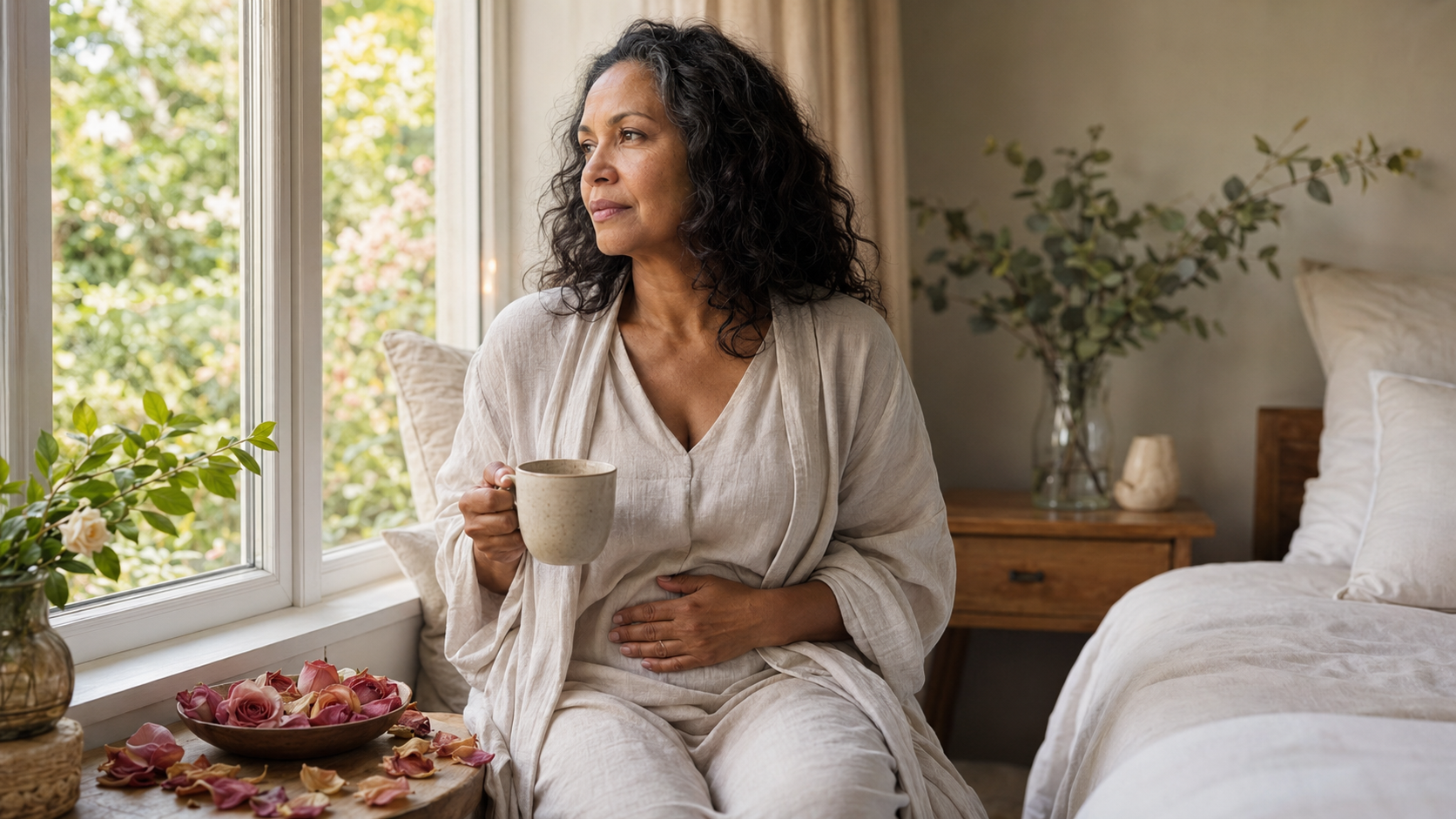
My period is one week late.
I have had all the familiar signs: the bloating, mild cramps, tiredness and a little discharge. My joints ache, my stomach feels swollen, and my body seems to be whispering that something is about to happen.
And yet, she has not arrived.
For the past few months, my periods were quite heavy but predictably on time. This month, there is simply no show. Now I am wondering whether those pre-period symptoms were real or whether I imagined them because, after so many years, I expected her to come.
I am 53 years old. I know this day must come. Still, knowing something will happen does not necessarily prepare you for how it will feel when it does.
We have been together since I was sixteen
My period and I have shared almost four decades.
She arrived when I was sixteen and continued returning, month after month. Even after I carried and birthed five children, she found her way back to me.
I knew her rhythms. The cramps, the bloating, the cravings, the headache and the occasional desperate need for an extra bar of chocolate. When I felt tearful, irritable or simply out of sorts, I could blame her.
She was inconvenient, messy and sometimes painful. However, she was also familiar.
I arranged holidays, appointments, social events and even certain outfits around her. She gave me a perfectly believable reason to sleep later, decline an invitation or withdraw from the world for a little while.
She was also a useful ally when I was exhausted and did not want intimacy.
“I have my period” was a complete sentence. No negotiation. No detailed explanation. No need to prove that I was tired enough to deserve rest.
Now I find myself wondering—perhaps with more than a little humour—what I am supposed to say when my husband feels frisky and my faithful monthly excuse is no longer available.
The honest answer is still: I am tired. I do not feel like it. I need space.
Perhaps this new stage is going to teach me that I never needed a period to make my boundaries legitimate.
Is this really her goodbye?
Medically, one late period does not confirm menopause. Menopause is reached only after 12 consecutive months without any menstrual bleeding or spotting. Until then, this stage is usually described as perimenopause—the hormonal transition leading towards menopause. During this time, cycles can become longer, shorter, heavier, lighter or disappear for several months before unexpectedly returning. Office on Women’s Health
So perhaps this is not goodbye. Perhaps she is only becoming unpredictable.
She may arrive tomorrow with all the drama of a guest who never bothered to tell me she was running late. She may disappear for two months and then return as if nothing happened. Perimenopause does not always provide a neat ending.
Pregnancy is also still possible during perimenopause, although fertility is much lower at 53. Therefore, if pregnancy is biologically possible, taking a pregnancy test is a sensible first step after a missed period rather than assuming menopause has arrived.
Still, facts do not remove the emotion.
Even if this is not my final period, it feels like the beginning of our farewell.
Were the symptoms real?
The bloating, cramps, fatigue and emotional changes were not necessarily “phantom” symptoms.
During perimenopause, ovulation and hormone patterns can become less predictable. You may experience sensations that resemble premenstrual symptoms without bleeding arriving when expected. Your body is not deceiving you, and you are not imagining what you feel. The pattern may simply be changing.
There is also no single, universally accepted medical list of exactly “61 symptoms” of perimenopause. Numerous symptom lists circulate online, but experiences differ greatly. Recognised symptoms can include cycle changes, hot flushes, disturbed sleep, anxiety, low mood, brain fog, headaches, joint or muscle discomfort, vaginal dryness and changes in sexual desire. NHS menopause guidance
Not every ache or difficult emotion should automatically be blamed on hormones, though. Symptoms can overlap with thyroid conditions, anaemia, vitamin deficiencies, stress, depression and other health concerns. That is why persistent or disruptive changes deserve proper medical attention rather than being dismissed as “just menopause.”
I am not only grieving blood
It is difficult to explain why the possible end of menstruation can feel sad, especially after years of complaining about it.
I am not grieving the stained underwear, heavy bleeding or painful cramps. I will not miss checking whether I packed enough pads or worrying that I might bleed through my clothing.
I am grieving what my period represented.
It marked time inside my body. It was a monthly confirmation that a familiar system was still working. It connected the sixteen-year-old girl I once was to the woman who carried five children and to the 53-year-old woman I am now becoming.
Its ending can feel like the closing of a long chapter—even when I have no desire to become pregnant again.
We are allowed to feel relieved and sad at the same time. We can welcome freedom from bleeding while mourning the body rhythm that accompanied us through so much of our lives.
That is not vanity. It is not weakness. It is a very human response to change.
Who do I blame now?
For years, my approaching period gave difficult days a name.
If I was crampy, tired, bloated or short-tempered, I could tell myself, My period is coming. That explanation brought reassurance because it meant the discomfort would pass according to a pattern I understood.
Now the pattern is shifting.
What comfort do I have when I wake feeling achy, overwhelmed or deeply irritated, but there is no predictable bleed waiting at the end of it?
Perhaps the work of this stage is to stop searching for someone—or something—to blame and start asking:
What is my body requesting from me today?
Maybe I need more sleep. Perhaps I need less noise, fewer obligations, gentler movement or a proper meal eaten while sitting down. Sometimes I may need a medical check-up. At other times, I may simply need everyone to stop asking me questions for half an hour.
Not every uncomfortable day requires a diagnosis. However, every uncomfortable day deserves attention.
When motherhood feels too loud
Children today with their school schedules, sport, transport, questions and endless needs. I love them, but some days I do not have the energy for any of it.
Sometimes I want peace and quiet with no humans.
There, I said it.
Wanting a break from the people you love does not mean you love them less. It can mean that your nervous system is overloaded and your needs have been pushed to the bottom of the household list for too long.
Perimenopause does not create every burden, but it can make an already unreasonable load harder to carry. The answer cannot always be for a woman to become more efficient. Sometimes the family needs to carry more.
Children can take on age-appropriate responsibilities. Adult children living at home can contribute. A husband can manage school transport, meals and household tasks without waiting to be directed. Rest should not be something a woman earns only after everyone else is satisfied.
And what about intimacy?
The end of menstruation does not remove my right to say no.
I do not require cramps, bleeding or a medical explanation before I am allowed to decline intimacy. Consent remains necessary inside marriage, and exhaustion is real even when nobody else can see it.
Perhaps instead of using my period as protection, I can begin speaking more directly:
“I love you, but I need rest tonight.”
“My body does not feel available for intimacy.”
“I need affection without an expectation that it must lead anywhere.”
If desire has changed, if intimacy is painful or if vaginal dryness is present, those concerns deserve honest conversation and appropriate healthcare. But a woman is not defective simply because her body, energy or desire changes. Nor is she obligated to override herself to keep someone else comfortable.
And no, a difficult week does not necessarily mean I need to divorce my husband. It may mean I need firmer boundaries, meaningful support and fewer people assuming unlimited access to my time and body.
How I can honour this transition
I cannot control exactly when my final period will arrive, but I can decide how I meet this season.
I can:
- Track bleeding, sleep, mood, headaches, joint discomfort and other symptoms without becoming obsessed with them.
- Arrange a medical assessment, particularly because my recent periods have been heavy.
- Ask about checking iron levels if heavy bleeding has left me unusually tired, breathless, weak or light-headed.
- Build small, protected periods of quiet into my day.
- Share household and parenting responsibilities instead of carrying them silently.
- Nourish myself with regular meals, adequate protein, fibre-rich foods, hydration and calcium-containing foods.
- Use gentle movement, stretching, walking, warmth and rest according to what my body tolerates.
- Speak honestly about intimacy instead of using menstruation as my only permission to say no.
- Treat my changing body as a body in transition—not a body in decline.
For comforting self-care, Aphrodite’s Garden’s Hormone Synergy Roller can become part of a calming aromatic ritual when emotions feel unsettled. The Period Support Massage Oil may offer a gentle massage ritual on crampy, bloated days, although it should not be used if pregnancy is possible until pregnancy has been ruled out. For warmer, more unpredictable days, the Chill Hot Flash Cooling Mist offers a refreshing botanical moment of care.
These products are supportive self-care companions; they do not diagnose or treat the causes of heavy bleeding, pain, severe mood changes or persistent fatigue.
When to speak to a healthcare professional
Period changes are common during perimenopause, but they should not automatically be ignored. ACOG advises discussing changes in bleeding with a qualified healthcare professional, even during the menopause transition. ACOG guidance
Please arrange an assessment if bleeding is unusually heavy, lasts longer than normal, occurs between periods or after intimacy, or is accompanied by significant pain, weakness, breathlessness or dizziness. Any bleeding after 12 full months without a period also needs prompt medical evaluation.
Because my periods have recently been heavy, this is something I should discuss with my doctor rather than simply accepting it as part of ageing.
Maybe she has not abandoned me
Perhaps my period has not left me yet.
Perhaps she is standing somewhere outside the door, late and unapologetic, preparing to return just after I have packed away the pads.
But whether this is the beginning of the end or simply one irregular month, something has shifted within me.
For almost four decades, my period helped me understand my body. Now I must learn a new language—one that may be less predictable but could also be more honest.
I no longer need bleeding to justify my tiredness. I do not need cramps to validate my need for quiet. I do not need a period to say no, slow down or ask my family to carry their share.
Maybe menopause is not my body abandoning me.
Maybe it is my body asking me, after years of caring for everyone else, whether I am finally prepared to listen to myself.
“The end of one rhythm does not make a woman less whole. It invites her to stop measuring herself by what her body once did and begin honouring what her body needs now.”


